Although visiting the Temple Mount is not always a pleasant experience these days, it is still worth the attempt. We have had good feedback from visitors who have used our guidebook to find things which otherwise they would have missed. One of the little known secrets described in our book (which can be purchased here) is a small window near the northwest corner of the Temple Mount. Despite its apparent insignificance, it has a large story to tell.
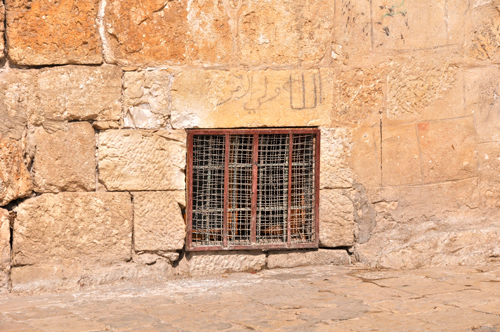
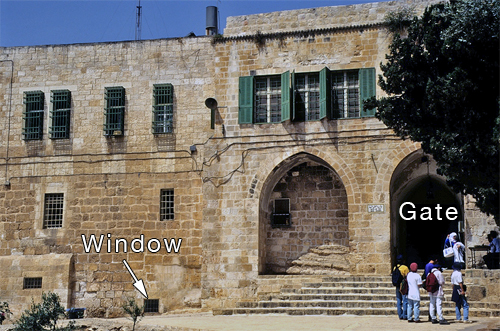
While walking on the Temple Mount platform, this opening, covered with a protective grille, can be found low down on the left-hand side, just before one reaches the northernmost gate in the Western Wall, the Bab el-Ghawanima Gate.
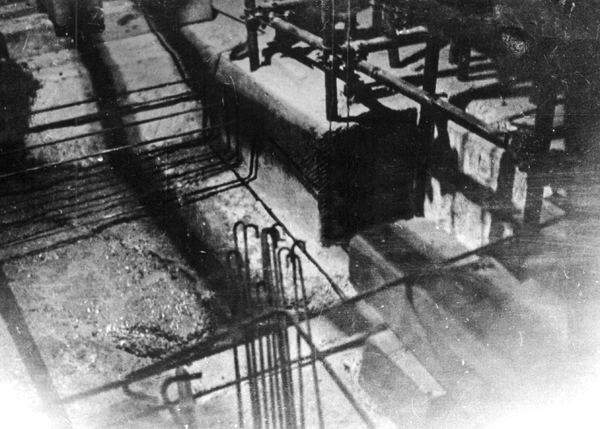
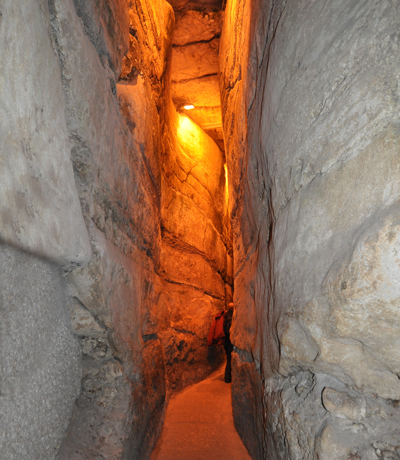
This window was already noticed by Charles Warren in the 1860s. On the inside is a little room where this opening, flanked by two pilasters, which appear to be late Herodian in style, can be seen. From here, in the Second Temple period, one could have entered the Rock-hewn Aqueduct, which can now be seen at the end of the Western Wall Tunnel.
This is what Charles Warren wrote about this discovery:
“Through the roof of the aqueduct Lieutenant Conder gained access into a small modern chamber, built against the Sanctuary wall, just north of the Bab es Serai; and here he found part of a wall of large drafted stones, with a plinth course and two pilasters, like those in the Haram Hebron. The space between the pilasters was occupied by a window, or opening into the Sanctuary, which seems to be ancient, as the lintel and jambs are of large ashlar – the former drafted.” Warren, Ch. and C. R. Conder (1884). Survey of Western Palestine: Jerusalem (London), p. 213.
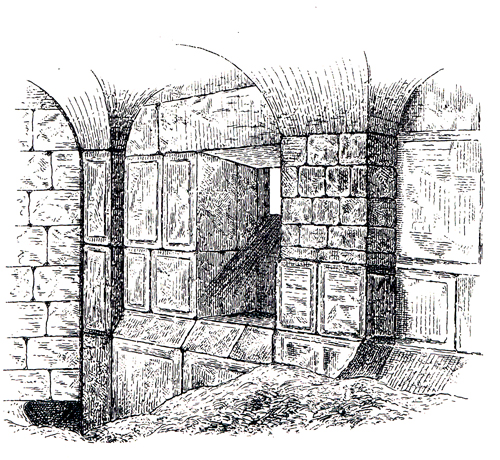
In the halcyon days of the 1970’s, when archaeologists from the Temple Mount Excavations were allowed to explore the hidden recesses of the platform, I was able to visit this space which had been turned into a room and look for these pilasters and the window. (In contrast with Warren, I accessed the room via the Muslim Quarter.) Although the pilasters had been painted over by the residents, the window overlooking the Temple Mount was still visible.
According to Josephus, the Roman siege of the Antonia Fortress in 70 A.D. was protracted, because of the destruction of the Roman earthworks by the Jews, under leadership of John of Gischala, who had barricaded himself inside the Temple Mount. He used an underground passage to get into the water reservoir (the Strouthion Pool) and undermine and set the earthworks that were built in this pool on fire (War5.466-472). This underground passage could only have been reached through this window that has the appearance of being hacked through in order to gain access to the area below the Antonia Fortress (normally you don’t build windows between pilasters at such a low level). For this reason we have dubbed this window the “Window of John of Gischala”.
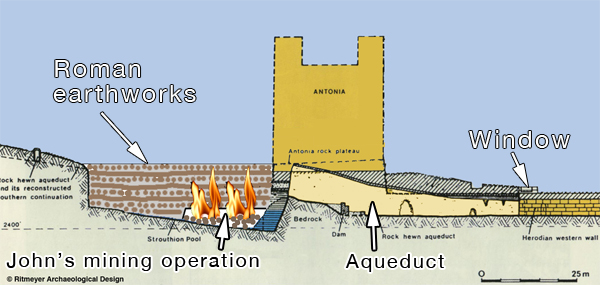
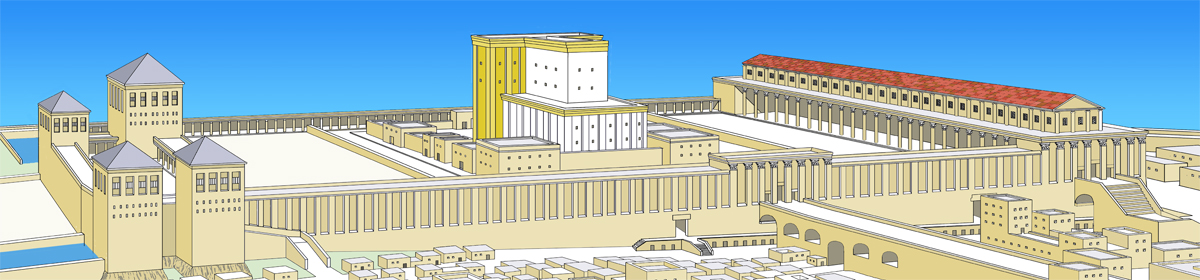
The drawing below is a reconstruction drawing of the northwest corner of the Temple Mount and the Antonia Fortress with the location of the “Window of John of Gischala” indicated:
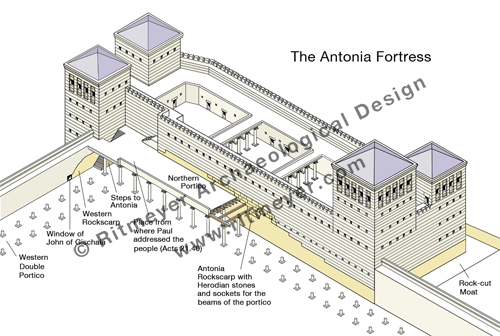
At the place where the northern and western porticoes met, there was a staircase leading up to the roof of the porticoes. At this place there was an entrance to the Antonia Fortress. The “Window of John of Gischala” is indicated at centre left.
It was because of such use of underground passageways by the Jews that Titus decided to build a siege wall around the city so that all communication with the country could be cut off and supplies interrupted. This resulted in a terrible famine and so the drama continued to its tragic end. This little window is one of those secret places on the Temple Mount where history echoes down the years.