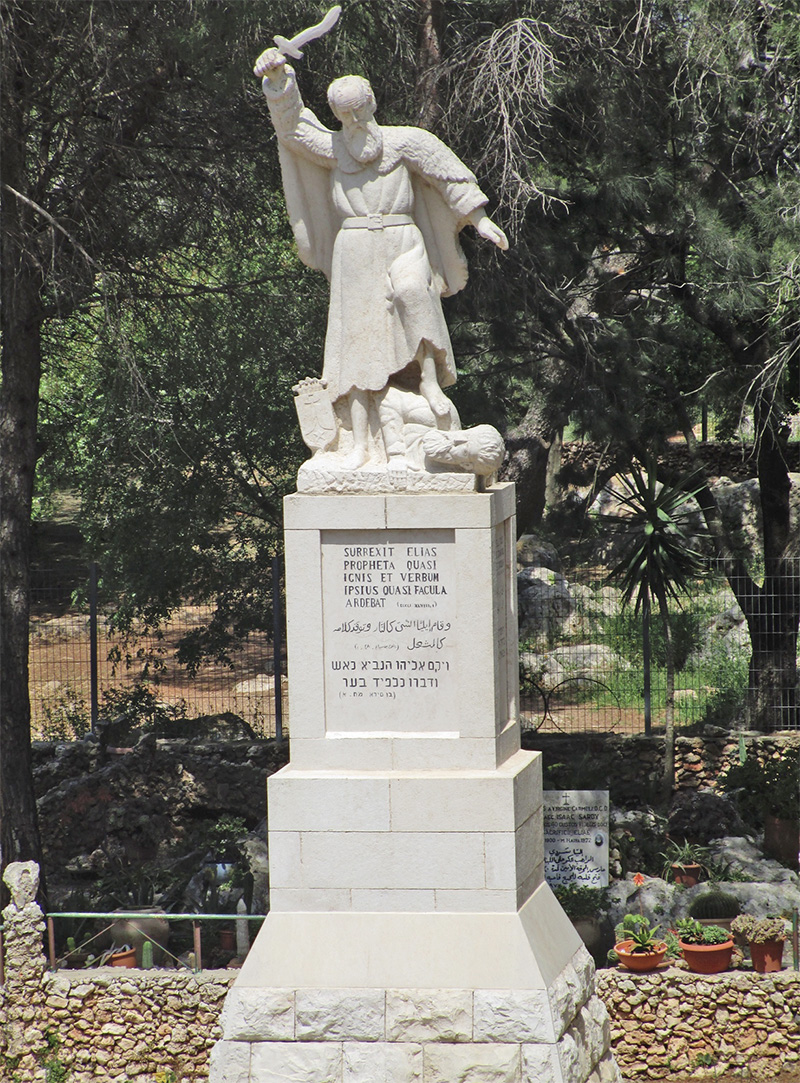
Will the Ark be found again? I have been mulling over this question for several years but hesitated to publish my research not wanting to be relegated to the lunatic fringe. Some of these proposals are well known, but many are based on unsubstantiated legends or personal preference. However, recent events in the Middle East that caused a worldwide energy crisis, economic hardship, and rising antisemitism as well as putting half of those counties on a war footing, may indicate that we are approaching, or indeed are already living in the prophetic last days. Religious Jews call these times the “birth pangs of the Messiah” (חבלי המשיח). This expectation of the approaching Millennial Kingdom compelled me to suggest a possible location where the Ark of the Covenant may be hidden. According to prophecy, a change in the government of Israel will be preceded by the coming of the prophet Elijah:
“I will send you Elijah the prophet before the coming of the great and dreadful day of Yahweh and will turn the hearts of the fathers to the children, and the hearts of the children to their fathers, lest I come and strike the earth with a curse (Hebrew: strike the Land with utter destruction)” Malachi 4:5,6.
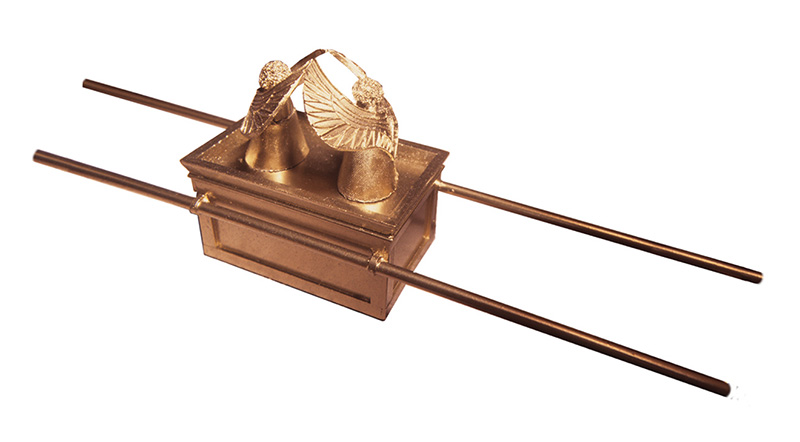
The Ark of the Covenant was made in the desert of Sinai (Exodus 25:10-22) and eventually placed in the Temple and, as we have seen, it then disappeared. If a reappearance of the Ark were to coincide with the return of Elijah, who we believe will come back to the nation of Israel, that would be a great sign confirming that Elijah is truly a prophet sent by God. Another sign could be the finding of Jeremiah’s earthen vessel with the signed evidence of the purchase of the field in Anathoth (Jeremiah 32:6-14).
When God sends prophets to do a great work, He often gave them a sign to encourage them on their mission. For example, when Moses asked for God’s Presence to go with him and encourage him to continue the great work of bringing the Israelites to the Promised Land, he asked to see God’s glory and he was shown the back of God on Mount Sinai (Exodus 33:18-23). John the Baptist was given the sign of a dove descending on Jesus in the River Jordan so that he and those that were with him could recognise Jesus as the Lamb of God (John 1:29-34).
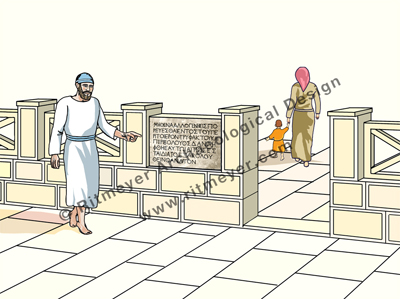
And when Saul was chosen to be the apostle to the Gentiles, Jesus appeared to him on the road to Damascus (Acts 9:3-5). His task was to explain that “Jesus is our peace, who hath made both one, and hath broken down the middle wall of partition between us [Jews and Gentiles]” (Ephesians 2:14). This middle wall of partition was an actual barrier on the Herodian Temple Mount, called the soreg, a kind of wall that separated Jews from Gentiles.
There is an intriguing passage about the Ark of the Covenant in Jeremiah 3:14-17 which says: “Return, O backsliding children, says Yahweh; for I am married to you. I will take you, one from a city and two from a family, and I will bring you to Zion. And I will give you shepherds according to My heart, who will feed you with knowledge and understanding. Then it shall come to pass, when you are multiplied and increased in the land in those days,” says Yahweh, “that they will say no more, ‘The ark of the covenant of Yahweh’. It shall not come to mind, nor shall they remember it, nor shall they visit it, nor shall it be done anymore. At that time Jerusalem shall be called the Throne of Yahweh, and all the nations shall be gathered to it, to the name of Yahweh, to Jerusalem.” This text appears to connect the appearance of the Ark of the Covenant with the setting up of the throne of the Lord, which is the throne of David. The Angel Gabriel promised Mary that her son Jesus would be given the throne of his father David. This will happen when Jesus returns to the earth, as promised by the two angels in Acts 1:11.
This prophecy speaks of the future Kingdom Age when a new Temple will be built in Jerusalem according to the specifications of Ezekiel 40-48. There will be an interim period when the Ark will stay in a temporary location where it could be visited presumably by priests only, but once the building of that Temple is complete and the Ark placed inside the Holy of Holies of the new Temple, then the Ark of the Covenant will not be visible to anybody except the priests, and therefore not be thought about or visited anymore, as Jeremiah prophesied. We may suggest a parallel with the time of David when he pitched a tent for the Ark where it stayed until it was put in Solomon’s Temple.
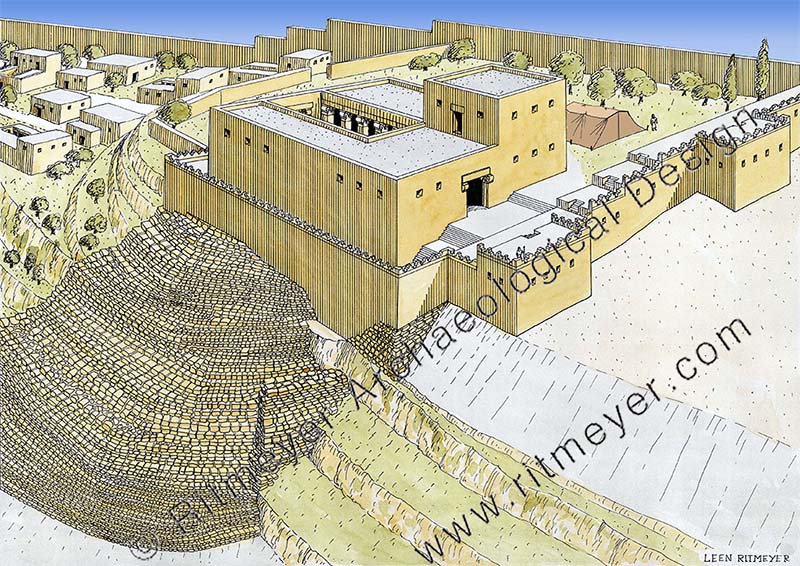
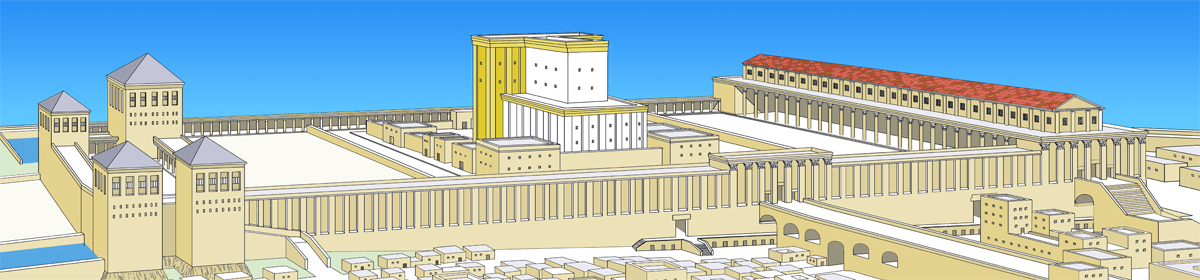
The function of the Temple was always to be a house for the Ark of the Covenant. According to the Ezekiel 41:4, the Holy of Holies of the future Temple measures twenty by twenty cubits, the same as the previous Temples of Jerusalem. There is no reason to expect that the Ark would be put in a different location than that which was originally chosen.
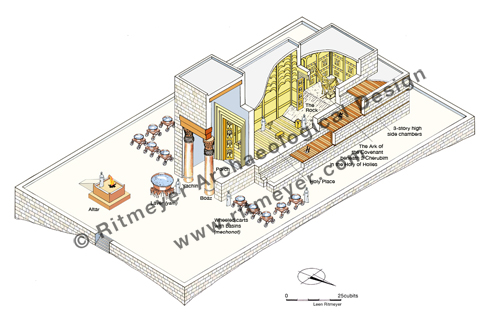
In the Book of Revelation there is a vision showing that the Temple of God was opened in heaven, and the Ark of His covenant was seen in His Temple (Revelation 11:19). That doesn’t mean to say that a Temple will be built in the heaven where God dwells. The future Temple will be built in Jerusalem, Israel’s capital, but based on heavenly principles.
This would agree with the prophecy of Isaiah that this Temple would be a house of prayer for all nations (Isaiah 56:7).
It says in Zech. 14:16 that all nations will come up to Jerusalem to keep the feast of tabernacles (succoth), “and it shall come to pass, that every one that is left of all the nations which came against Jerusalem shall even go up from year to year to worship the King, Yahweh of hosts, and to keep the feast of tabernacles”.
How will these people worship Yahweh in the Kingdom and how will they keep the feast of tabernacles? The keeping of this feast involves the making of temporary booths made of “the fruit of beautiful trees, branches of palm trees, the boughs of leafy trees, and willows of the brook” (Leviticus 23:40). It will remind the mortal population of the temporary nature of their lives on earth. This should urge them to seek salvation in Jesus, the king they will see and worship.
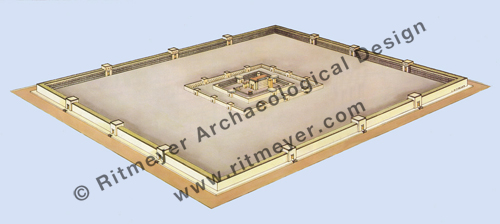
Where will they build these booths? The Temple description in Ezekiel speaks of a vast square outer court, measuring 500 reeds, or 3,000 cubits (1575 m, 1 mile) each side (Ezekiel 42:17-20). The huge size of this outer court will be necessary to accommodate the many worshipers that will come all year round to Jerusalem to build their booths.
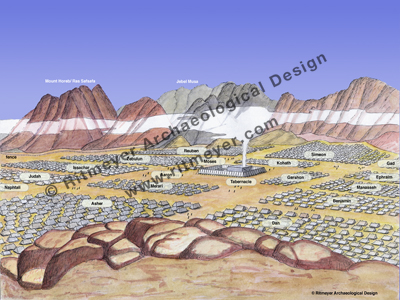
The resurrected and justified saints will serve Jesus in the Kingdom as kings and priests and will be responsible for their welfare and spiritual understanding (Luke 19:12-19; Revelation 1:6; 5:10). The saints that are responsible for their particular group will teach them the significance of the Feast of Tabernacles and instruct them that salvation can only be obtained by the blood of Jesus Christ their saviour, who is our Passover and who was also sacrificed for us.